
Professional Paver Sealing in Tampa Bay
A 3-step restoration, clean, sand, and seal, that protects and transforms driveways, patios, and pool decks for years.
Clean, Sand & Seal
Protect your paver investment from stains, weeds, fading, and Florida's brutal sun.
Pavers are an investment, and without proper sealing, they stain, fade, grow weeds between joints, and become slippery with algae. Our 3-step paver restoration process (clean, sand, seal) doesn't just protect your pavers, it transforms them. We clean, re-sand, and seal driveways, patios, pool decks, and walkways across Tampa Bay using a surface-specific process.
Step 1 is thorough pressure washing to remove all dirt, algae, mildew, and old sealer. Step 2 is ASTM C-144 masonry sand application to stabilize joints, prevent weed growth, and lock pavers in place. Step 3 is professional-grade sealer application, we use penetrating or wet-look sealers depending on your preference. The finish lasts 2–4 years and makes future cleaning dramatically easier.
Our Process
Three steps. One transformed paver surface that looks better than new.
Clean
Thorough pressure wash removes dirt, algae, mildew, and old sealer.
Sand
ASTM C-144 masonry sand stabilizes joints, prevents weed growth, and locks pavers in place.
Seal
Professional-grade sealer (penetrating or wet-look) applied for long-lasting protection.
Paver Sealing FAQ
Everything you need to know before sealing your pavers.
A standard 2-car driveway typically takes 4–6 hours for the full clean, sand, and seal process. We need pavers to be completely dry before sealing, so same-day completion requires early morning start times or is scheduled across two days if rain is in the forecast.
In Florida's climate, professional-grade sealer typically lasts 2–4 years before re-sealing is recommended. UV exposure and heavy traffic accelerate wear.
Penetrating (or natural look) sealer soaks into the paver and provides protection without changing the paver's appearance. Wet-look sealer sits on top of the paver and creates a glossy, enhanced-color finish. We'll show you samples before you decide.
Yes, we include ASTM C-144 masonry sand joint restoration in our standard paver sealing service. This is critical. Old sand washes out over time, allowing weeds to grow between joints and pavers to shift. Fresh ASTM C-144 masonry sand stabilizes joints and inhibits weed growth.
Sealing over stains locks them in. We perform a thorough pressure wash and spot-treat stains before sealing. Most stains come out completely. Deep oil stains may require additional pre-treatment. We'll identify any concerns before we seal.
Related Services
Bundle services and save. Ask about our multi-service package pricing.
Why JAB for Paver Sealing
Four reasons Tampa Bay property owners pick us for this service specifically.
Wet-Look or Natural Finish
Some homeowners want the rich wet-look sheen; others prefer a natural matte finish. We offer both, show you sample panels before sealing, and apply the finish you chose, not whatever we have in the truck.
ASTM C-144 Masonry Sand, Not Regular
Regular silica sand washes out in Florida rain within months. ASTM C-144 masonry sand locks into place when activated and stays put for years. This is a non-negotiable for a lasting paver job, we use it on every seal.
Two-Visit Process
Pavers must be fully dry before sealing or you trap moisture under the sealer and it fogs. We clean on visit one, return 24–48 hours later to seal. Some companies rush same-day; results show within six months.
Florida-Specific Sealer
Not all sealers handle Tampa Bay UV and heat. We use penetrating sealers engineered for Florida climate, no yellowing, no flaking, no peeling after a summer of 95°F and daily rain.
Built for Tampa Bay Conditions
Florida Climate Reality
Florida's sun, humidity, and daily summer rain are brutal on unsealed pavers. UV fades the color within 12–18 months; rainwater washes out joint sand; algae colonizes porous surfaces. A properly sealed paver driveway or pool deck holds color, resists staining, and keeps joints intact for 3–5 years before needing resealing.
HOA & Local Context
HOA-managed paver pool decks and driveways, common in Westchase, Lansbrook, Bloomingdale, and Trinity, often have appearance standards that apply to sealer condition. A faded or uneven paver hardscape can draw HOA letters just as fast as dirty siding.
We service paver sealing across:
- Tampa, FL
- Brandon, FL
- Palm Harbor, FL
- Clearwater, FL
- Riverview, FL
Common Questions
Straight answers to what Tampa Bay homeowners actually ask us about paver sealing.
If you want them to keep their color, resist stains, and keep joint sand from washing out, yes. Unsealed pavers in Florida fade noticeably in 12–18 months, lose joint sand every rainy season, and become an algae magnet. Sealing protects the investment.
3–5 years for most Tampa Bay residential driveways and pool decks, assuming normal use. Areas with heavy sun exposure or constant foot traffic (pool coping, main walkway) may need resealing closer to 3 years; shaded driveways can stretch to 5+.
Wet-look sealers leave a glossy sheen and deepen the paver color, like the look right after rain. Natural sealers protect without changing the appearance. Both use the same protection chemistry; it's purely aesthetic preference. We'll show sample panels before you decide.
Foot traffic: 24 hours. Vehicle traffic: 48–72 hours depending on temperature and humidity. We schedule jobs so you're not locked out for a weekend, most driveways seal Friday afternoon and are ready for the car by Monday morning.
Sometimes, depends on what's already on there. Previous wet-look sealers often need to be stripped before re-sealing, or you'll get uneven absorption. We inspect during the estimate and tell you honestly what prep is required.
Yes, paver pool decks and lanais are common in Tampa Bay and one of our most-requested services. Sealing makes them less slippery (specific anti-slip additives available) and much easier to keep clean.
Two visits over 2–4 days. Day 1: clean and dry (3–5 hours on-site). Day 2 (24–48 hours later): re-sand and seal (3–5 hours on-site). Then 24–72 hours of cure time. Total elapsed: typically 4 days start to usable.
No. Travertine and natural stone require a penetrating impregnating sealer, not a film-forming topical sealer. Using the wrong product traps moisture inside the stone, leading to spalling and expensive stripping jobs. JAB only uses stone-appropriate products and pH-neutral cleaners.
Stripping an improperly applied film-forming sealer from natural stone is labor-intensive and sometimes requires chemical strippers that must be carefully neutralized to avoid damaging the stone further. Getting it done right the first time is always the better investment.
Yes, proper preparation is everything. We use pH-neutral, stone-safe cleaning solutions (never chlorine, which etches stone) and allow full dry time before applying any sealer.
Keep Exploring
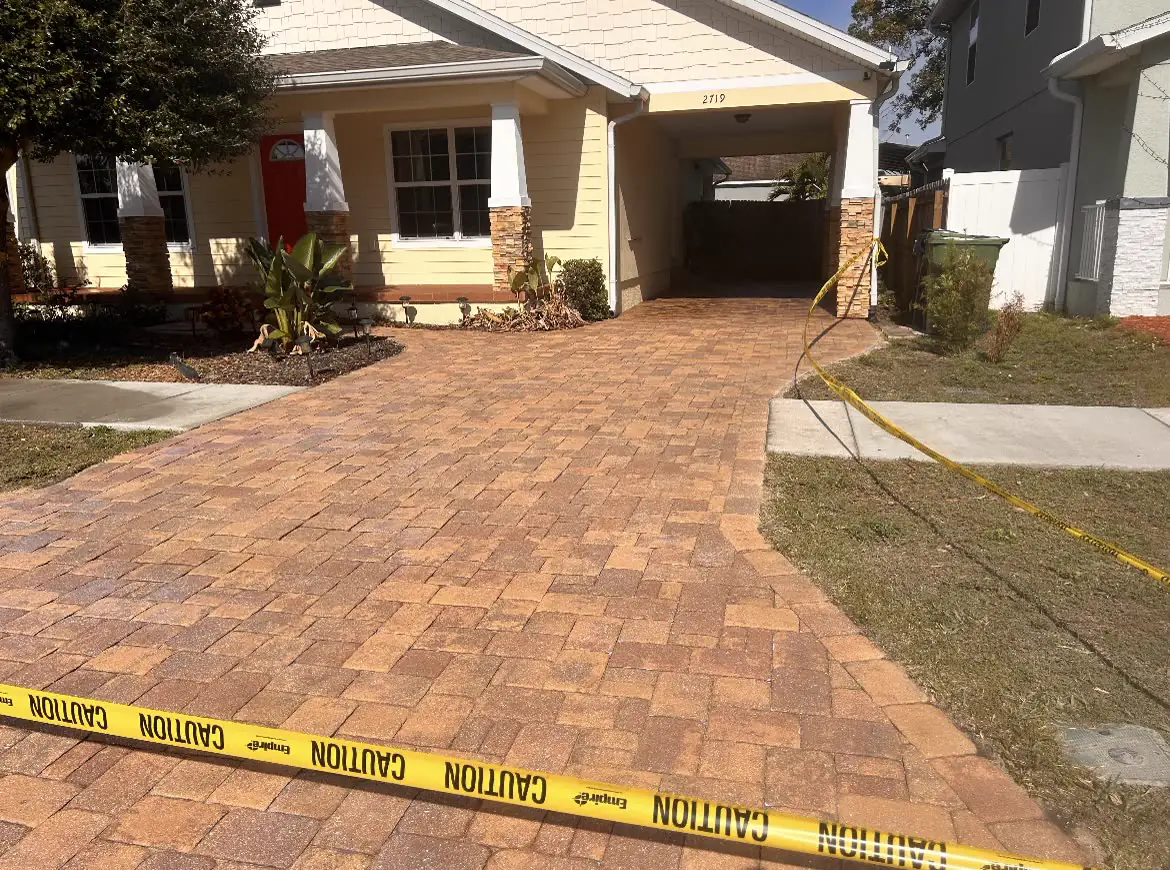
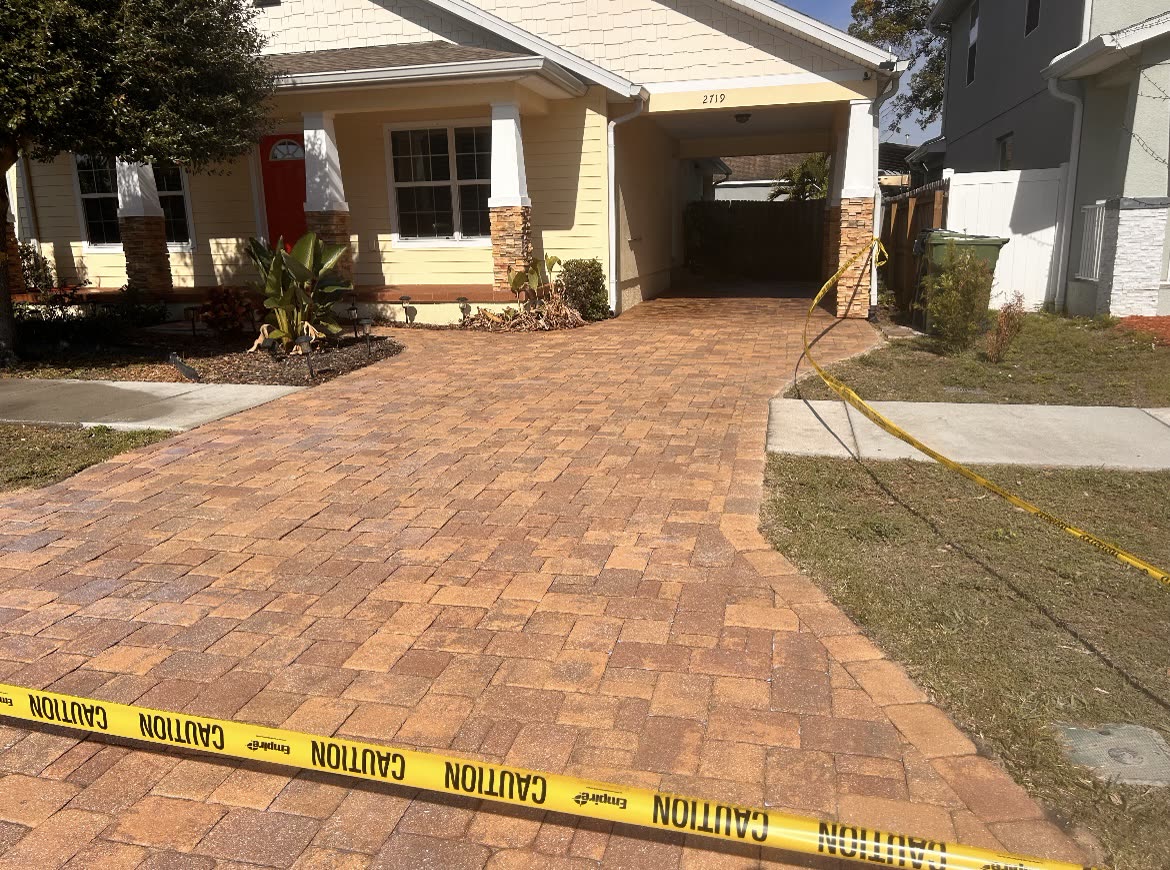
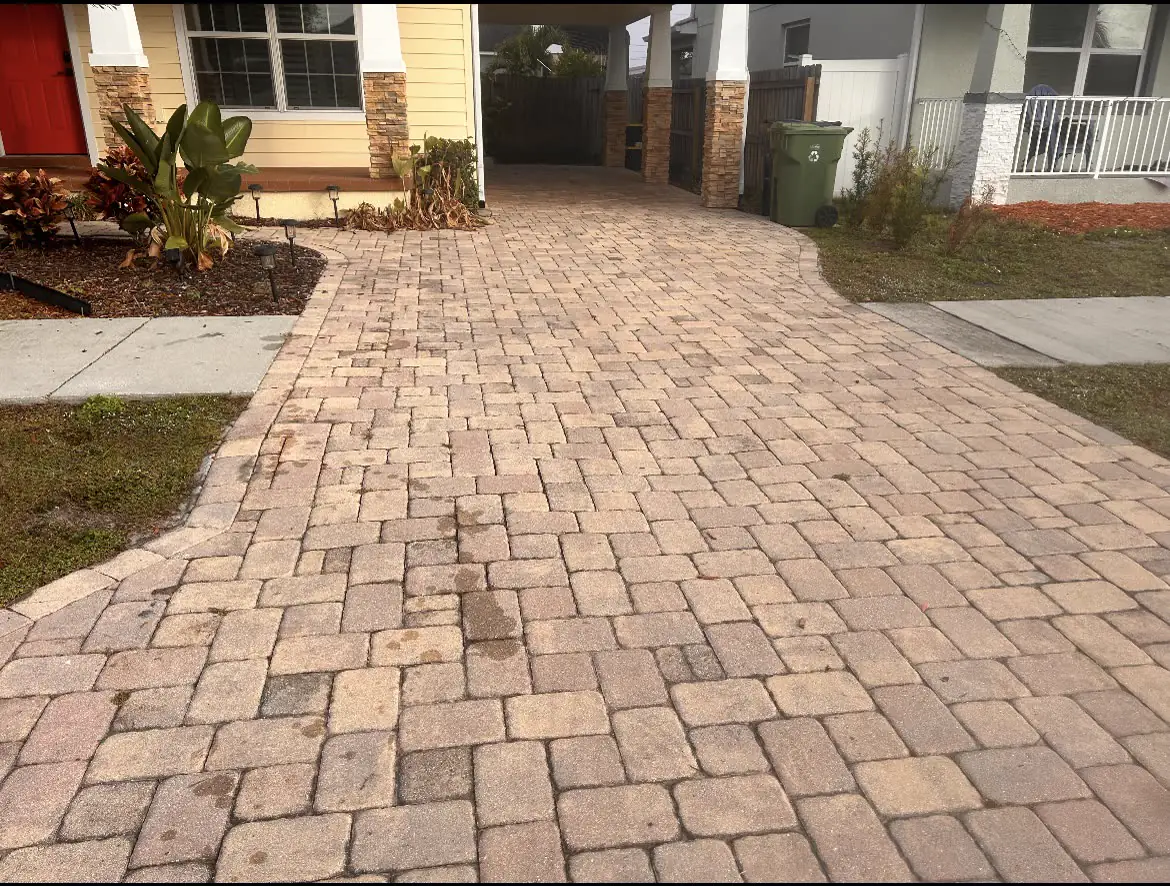
Paver & Stone Work Gallery
Recent paver restoration and sealing jobs from across Tampa Bay.
Travertine & Natural Stone Sealing
Travertine, marble, coquina, and limestone require a completely different approach than concrete pavers. JAB is a specialist, not a generalist.
JAB specializes in natural stone sealing — travertine, marble, coquina, and limestone — which requires a completely different approach than standard pavers. Travertine pool decks and patios are common across Clearwater, Palm Harbor, Tampa, and Tarpon Springs waterfront communities, and getting the sealing right is the difference between a pool deck that lasts a decade and one that spalls, discolors, and needs expensive remediation in three years.
Most Contractors Do It Wrong
They use film-forming sealers that trap moisture inside the stone, causing spalling, discoloration, and delamination within two to three years. The sealer looks great for a few months, then fails catastrophically — cloudy patches, peeling flakes, or worse, pieces of the stone breaking off because trapped moisture has nowhere to go.
Stripping a bad sealer job costs roughly double what proper sealing costs in the first place. The chemicals needed to remove film-forming sealers are aggressive, and they must be carefully neutralized to prevent further damage to the stone itself. We see this problem regularly on travertine pool decks across Tampa and Clearwater.
Chlorine Cleaners Damage Natural Stone
Chlorine-based cleaners — common in cheap pressure-wash solutions — etch the surface of natural stone and break down the mineral structure over time. For a travertine pool deck already getting regular chlorine splash from the pool, adding chlorine cleaning on top accelerates the damage significantly.
JAB uses pH-neutral, stone-safe cleaning solutions that remove algae, mildew, and organic staining without attacking the stone itself. Every travertine or natural stone job gets product calibrated specifically for that surface — never the same generic chemistry we'd use on concrete.
Penetrating Impregnating Sealers, Not Film-Forming
JAB applies penetrating impregnating sealers (not film-forming topical sealers) that absorb into the stone's matrix, bonding with the mineral structure from within. This protects against stains, water intrusion, and salt damage without altering the stone's appearance, color, or natural slip-resistant texture.
The right impregnating sealer for travertine is not the same as the one for marble or coquina. Selecting the product is part of the job — we don't keep a single "stone sealer" in the truck and use it on everything.
Proprietary Preparation Process
Proper preparation is 80% of a lasting stone seal. JAB's process: deep clean with stone-safe solution, neutralize any residual chemistry, verify moisture content with a meter (stone must be fully dry or sealer won't bond), then seal in controlled conditions — no direct sun baking the sealer before it penetrates, no rain within 24 hours.
The neutralization step and moisture check are what most competitors skip. Those skipped steps are exactly why so many travertine jobs in Florida fail within two years.
Travertine Pool Decks Are Vulnerable in Florida
Travertine pool decks face a unique combination of stressors: direct UV exposure that breaks down surface layers, pool chemicals (chlorine, salt systems, muriatic acid) that splash and etch, and Florida humidity that keeps the stone damp and biologically active. Annual inspection and maintenance sealing on a 2–3 year cycle is standard for a travertine pool deck in Palm Harbor or Tarpon Springs.
If you have a travertine pool deck and you don't know when it was last sealed — or if it's starting to show darker wet spots that don't dry out — it's time for an inspection.
Why Most Stone Sealing Jobs Fail
The Wrong Way
- Chlorine-based cleaner — etches stone, breaks down minerals
- Film-forming topical sealer — traps moisture inside the stone
- Single coat, done same-day
- No moisture check before sealing
- Same product for every surface
- No follow-up inspection
The JAB Way
- pH-neutral, stone-safe cleaning solution
- Penetrating impregnating sealer matched to the specific stone
- Two-visit process: clean, dry-check, then seal
- Moisture meter verification before sealing
- Surface-specific product and technique
- Quality inspection + annual check-in
JAB vs. The Other Guys
The four-point difference when it comes to paver and natural stone sealing in Tampa Bay.
| What Matters | Others | JAB |
|---|---|---|
| Sealer Type | Film-forming topical sealers | Penetrating impregnating sealers |
| Cleaning Chemistry | Chlorine-based cleaners | pH-neutral, stone-safe solutions |
| Process | One-size-fits-all | Surface-specific preparation and product |
| Priority | Price-first | Quality-first with written workmanship warranty |
Ready to Transform Your Property?
Get a free, no-obligation estimate today. Most jobs quoted same day.
(813) 214-5586